Primed Moulding & Millwork
Finger-joint pine or MDF, primed and ready for topcoat
Ready-to-install interior trim, made to order. We run the same profiles in two materials, and the choice is about where the trim has to live rather than about price. Finger-joint pine uses kiln-dried Southern Yellow Pine or New Zealand radiata. Clear timber does not come in long clear lengths, so short clear pieces are finger-jointed end to end — that joint is exactly what makes a straight, stable 5.4 m stick affordable, and under primer and topcoat it disappears. Pine is preferred over standard MDF for intermittently humid interior locations such as bathrooms and thresholds, subject to the adhesive and coating specification agreed for the order — tell us the exposure and we will confirm what the build can take. For a stained finish rather than paint, ask about solid clear or stain-grade construction: a finger joint disappears under primer and topcoat, but it stays visible under stain. MDF is not a finger-joint product and should not be described as one. It is pressed as a continuous board and machined in one piece, so a length has no joints in it at all — no grain raise, no knots telegraphing through after a season, no resin bleed, and crisp detail on ornate profiles that pine rounds off. It gives the better painted surface by a clear margin. The trade-off is absolute: MDF swelling is permanent, so it belongs in dry interior rooms only. Both arrive primed and ready for site topcoat, tooled to your drawing rather than picked from a catalogue, packed and labelled for US and EU retail programmes.
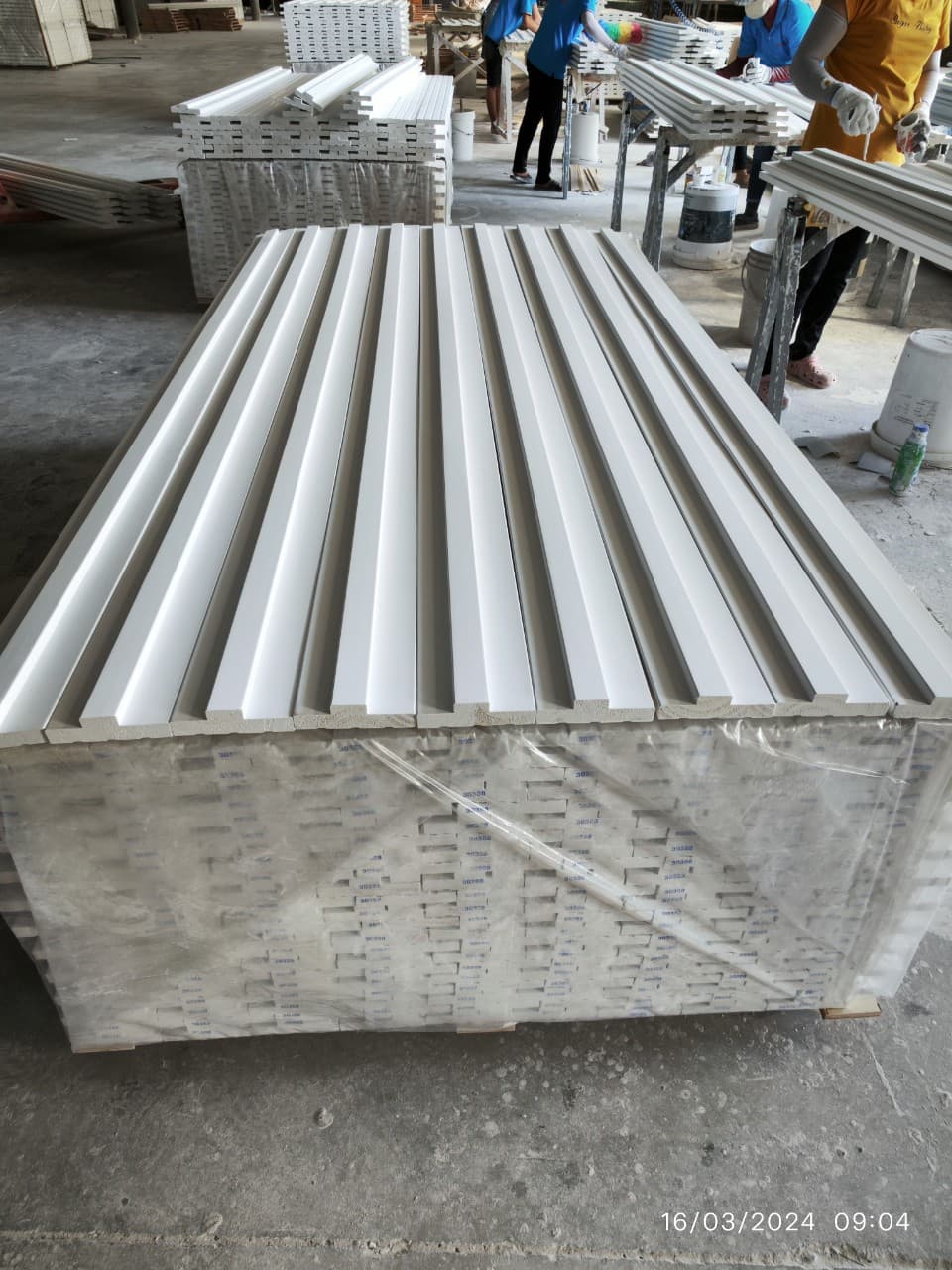
Lengths
Up to 17' 9" (5.4 m)
Timber
Kiln-dried Southern Yellow Pine (SYP) or New Zealand radiata pine, finger-jointed
Primer
White gesso or lacquer primer, ready for site top-coat
Profiles
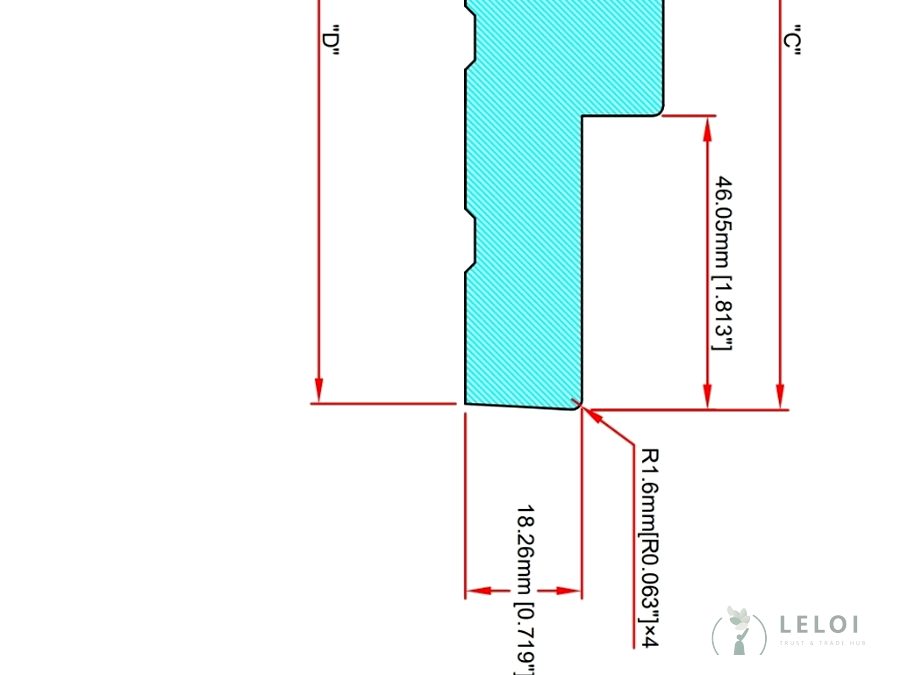
Tooled to your drawing — casing, baseboard, crown, door jamb
Part of Millwork & Moulding — compare it against the other lines for this job.
Available surfaces & types
Choose the face and grade that fit your market — produced to your spec at our long-term partner mills.
Specifications
Certification available subject to mill and product confirmation — tell us your destination market and we will confirm what is in scope.
From kiln-dried pine to a sealed container
Send a profile drawing and we cut the knives, run a sample, then start the order. Eight steps, one mill.
Kiln-dried pine
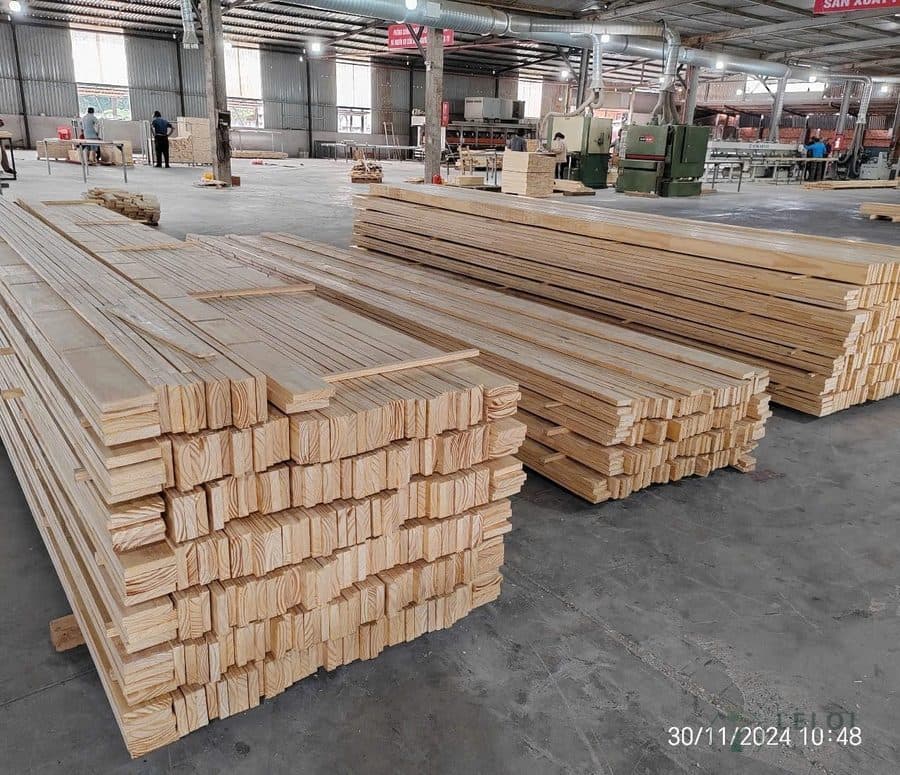
Southern Yellow Pine or New Zealand radiata, kiln-dried before anything else happens to it.
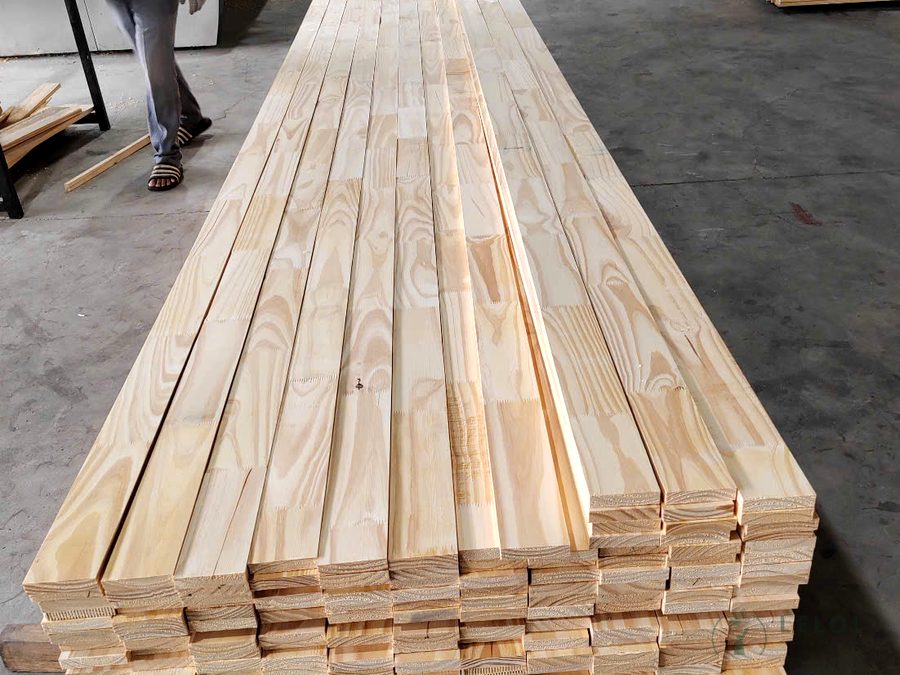
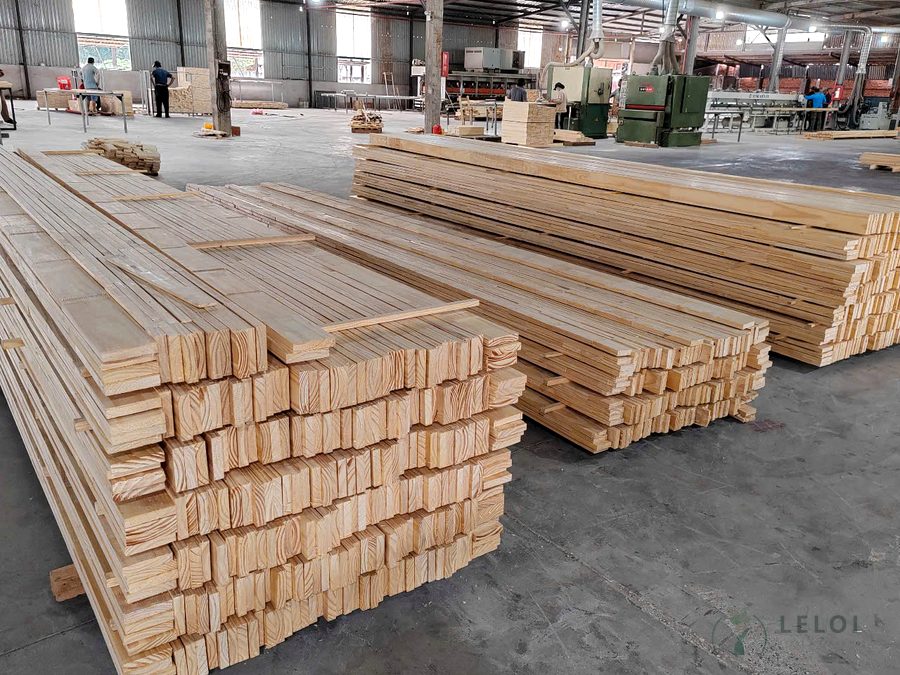
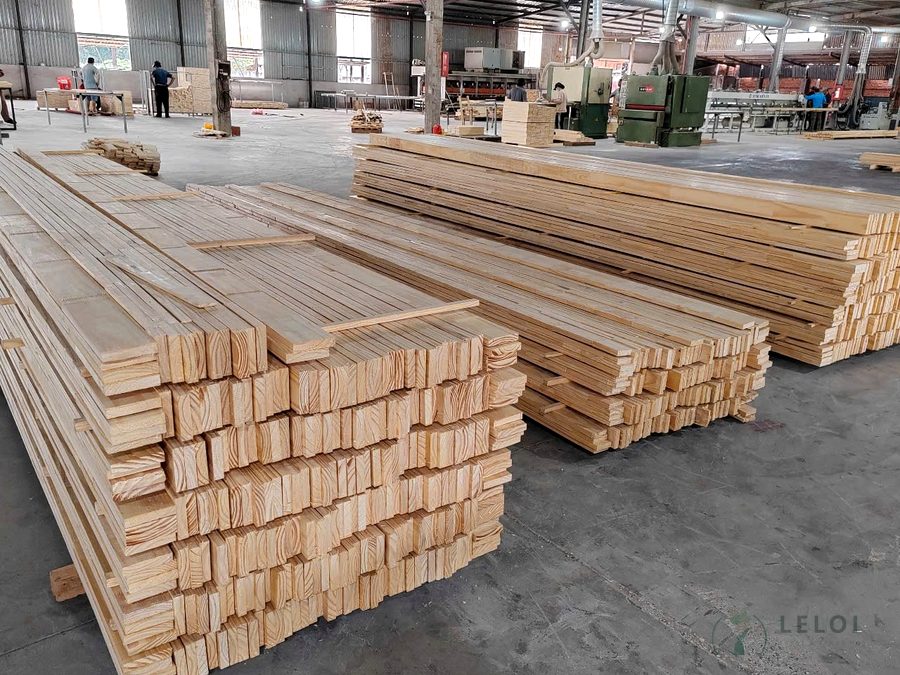
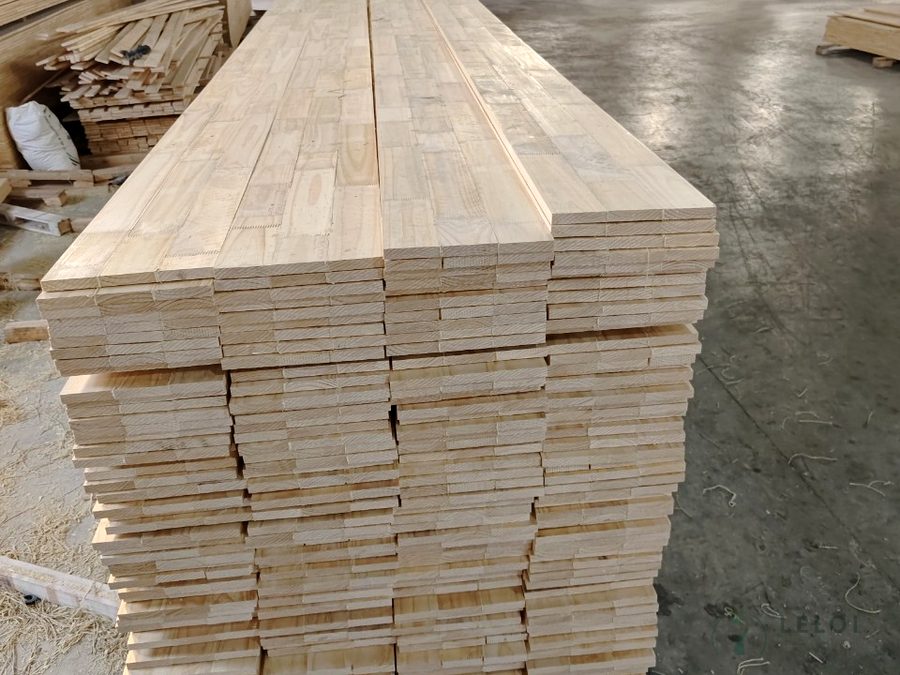
Finger-jointing
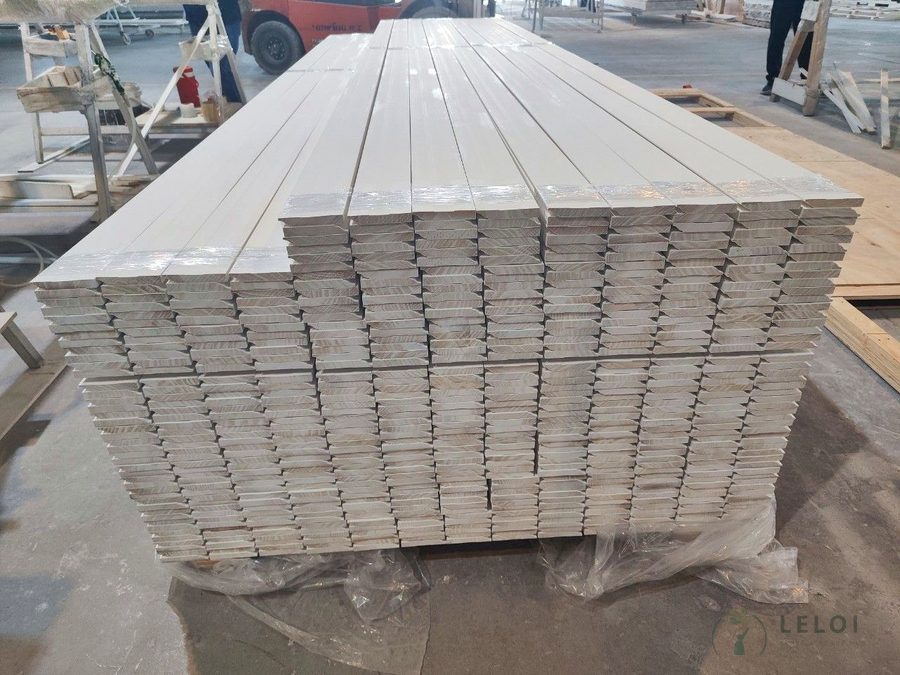
Short clear lengths are jointed into long, straight blanks. The joint stays visible in the core — that is the point.
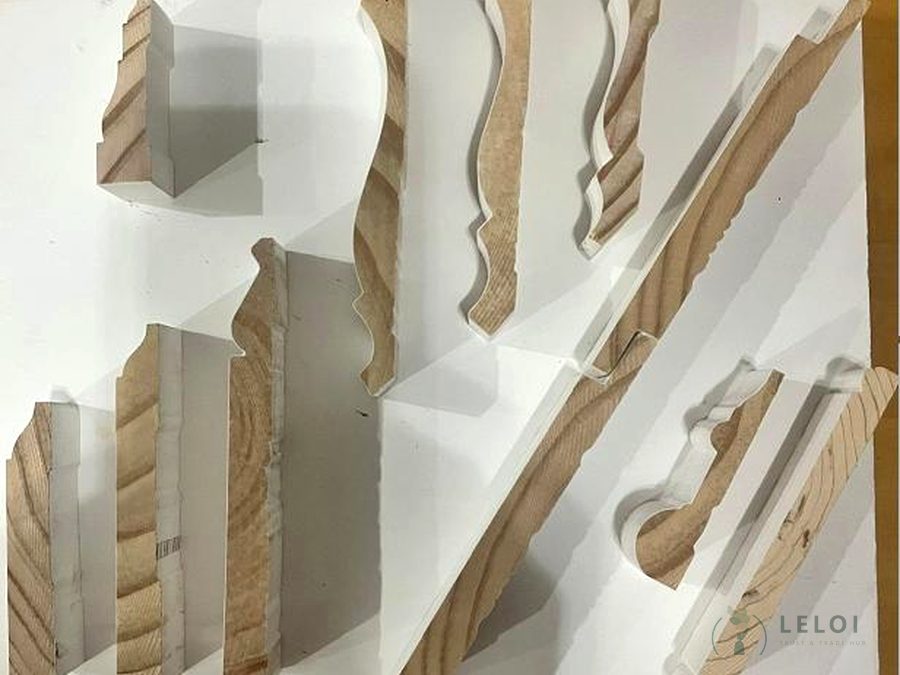
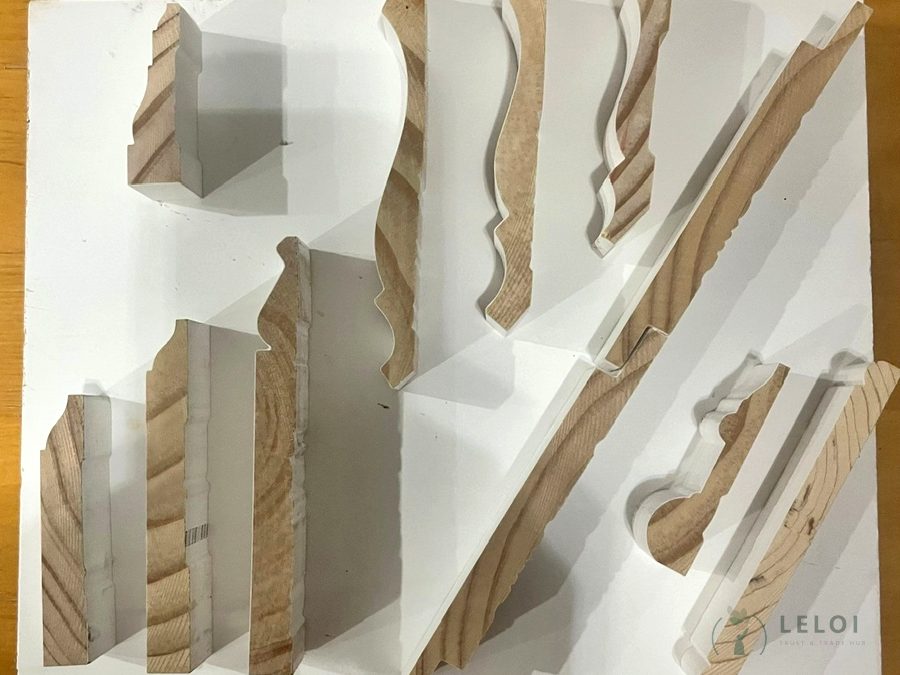
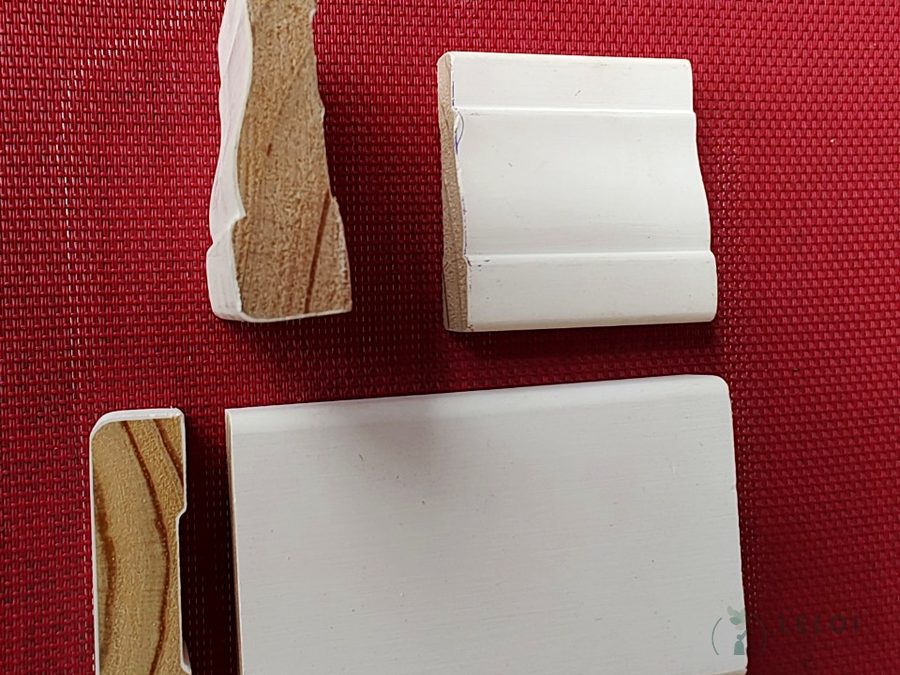
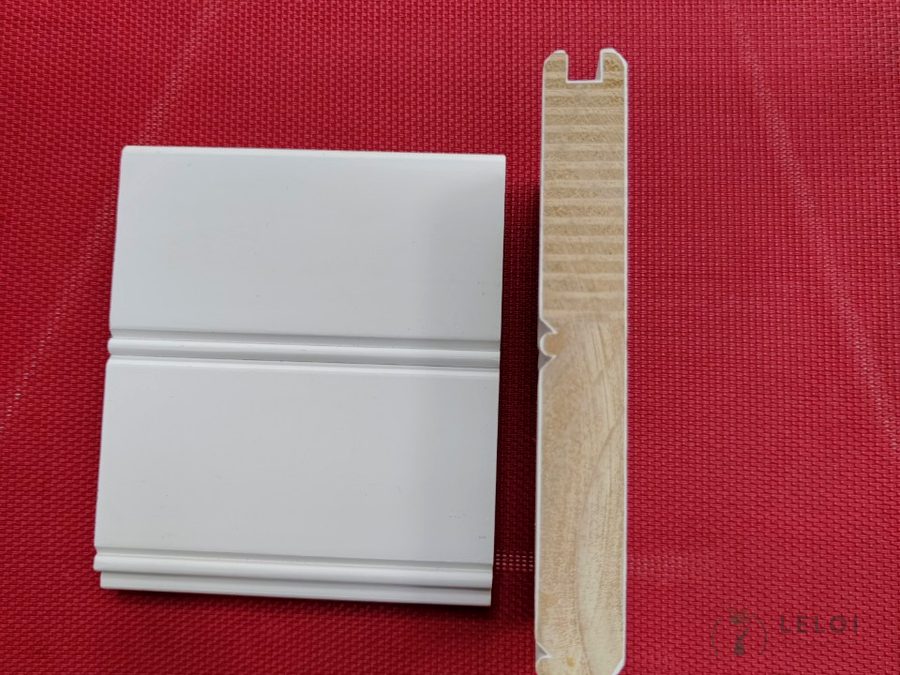
Profiling
Moulders cut the profile from your drawing. Tooling is made per profile, not picked from a fixed range.
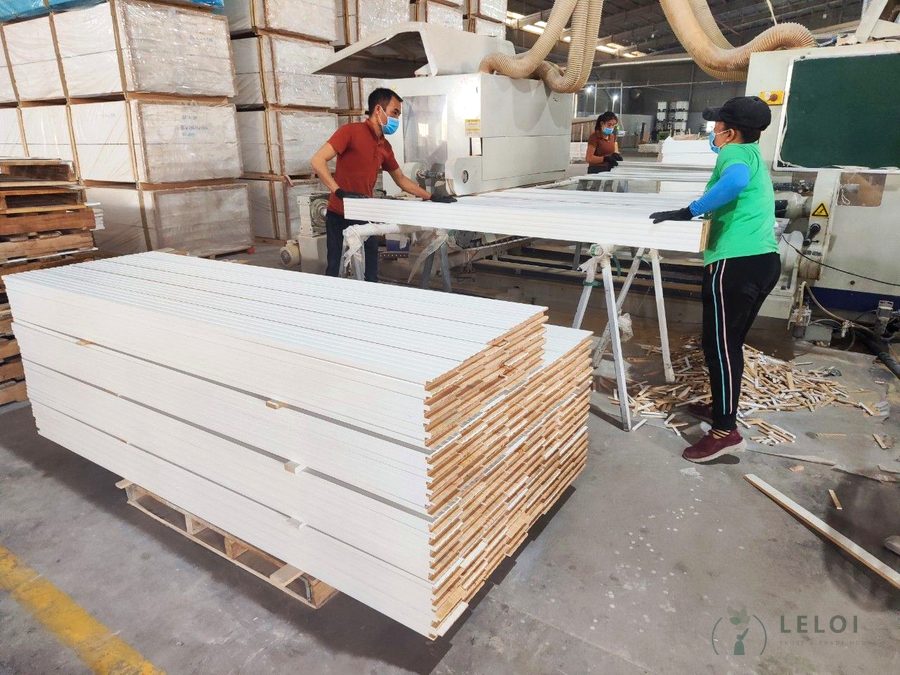
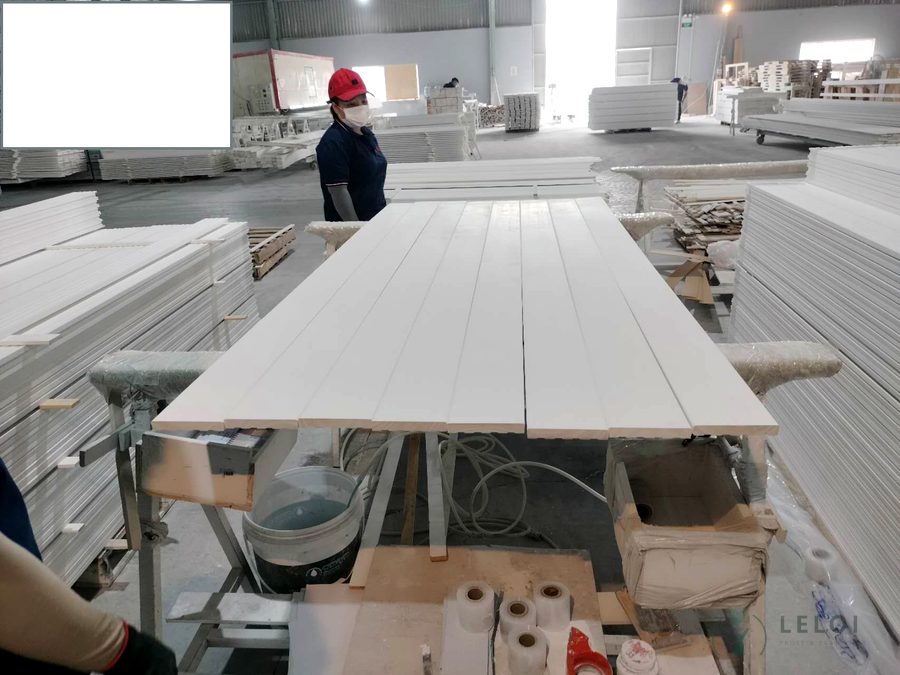
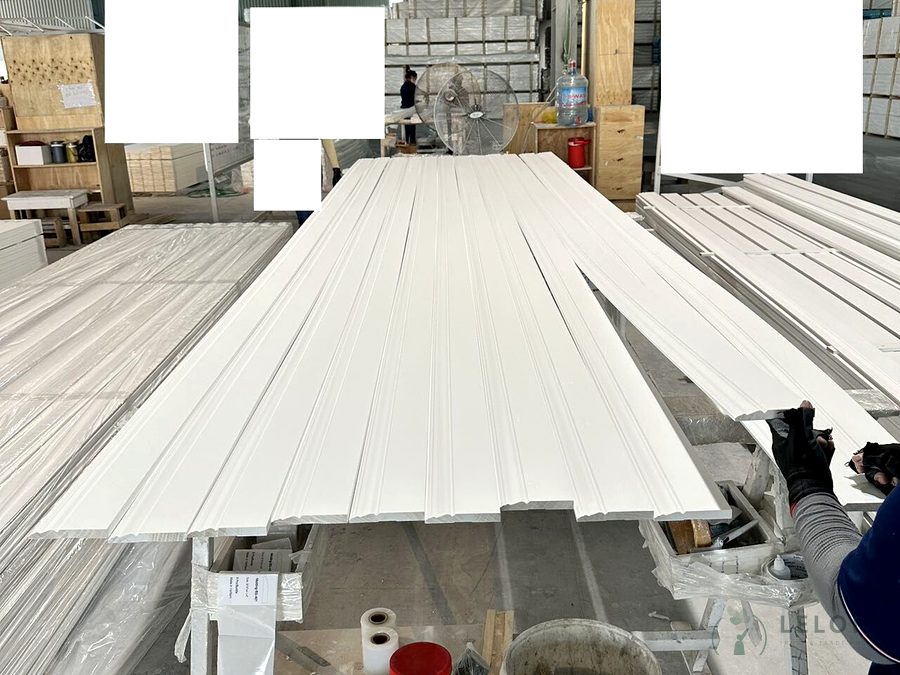
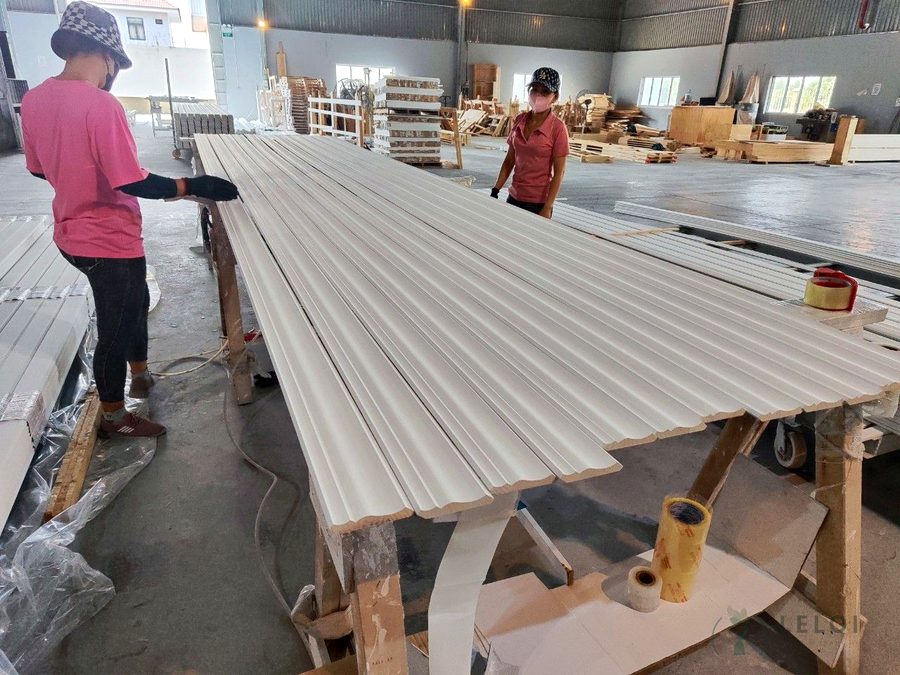
Priming
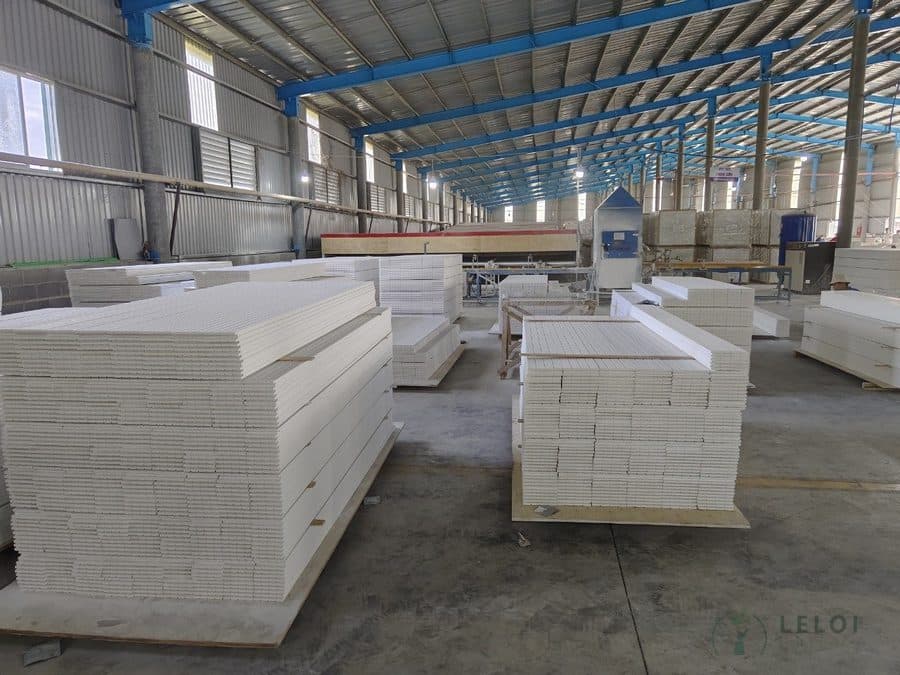
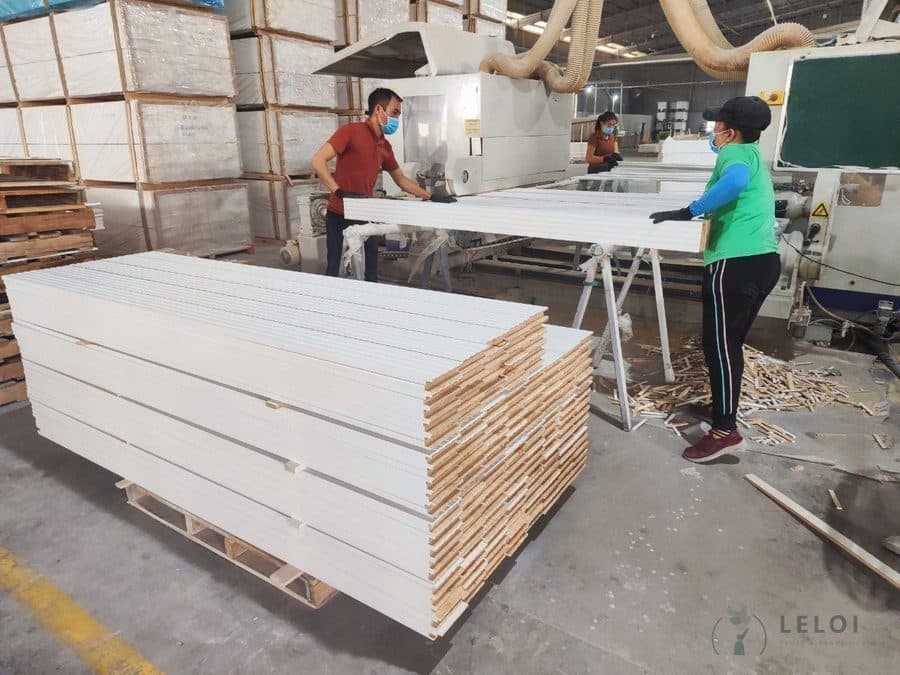
White gesso or lacquer primer, sanded between coats so the topcoat goes on flat at site.
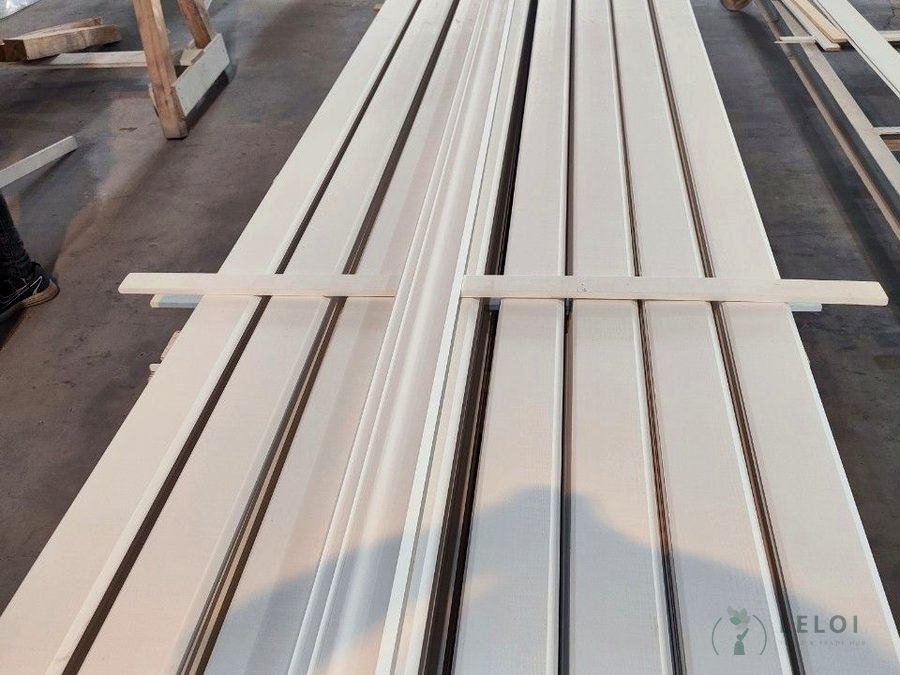
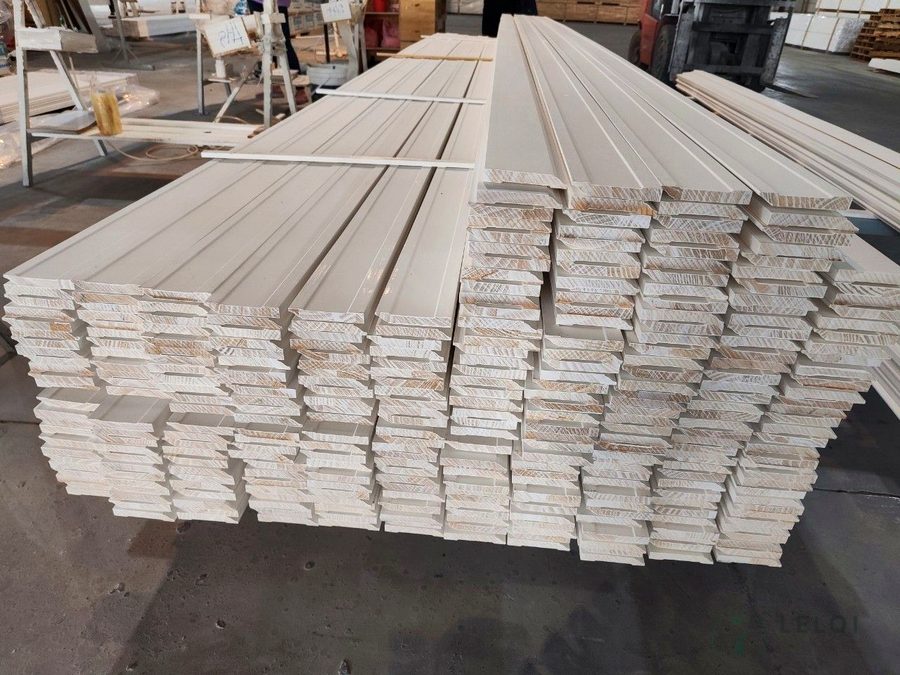
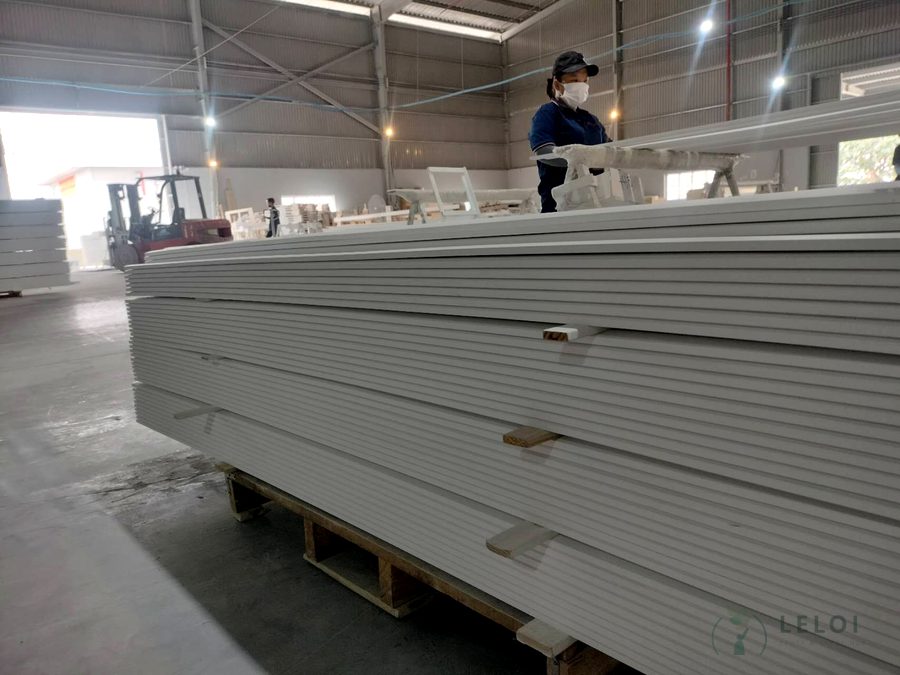
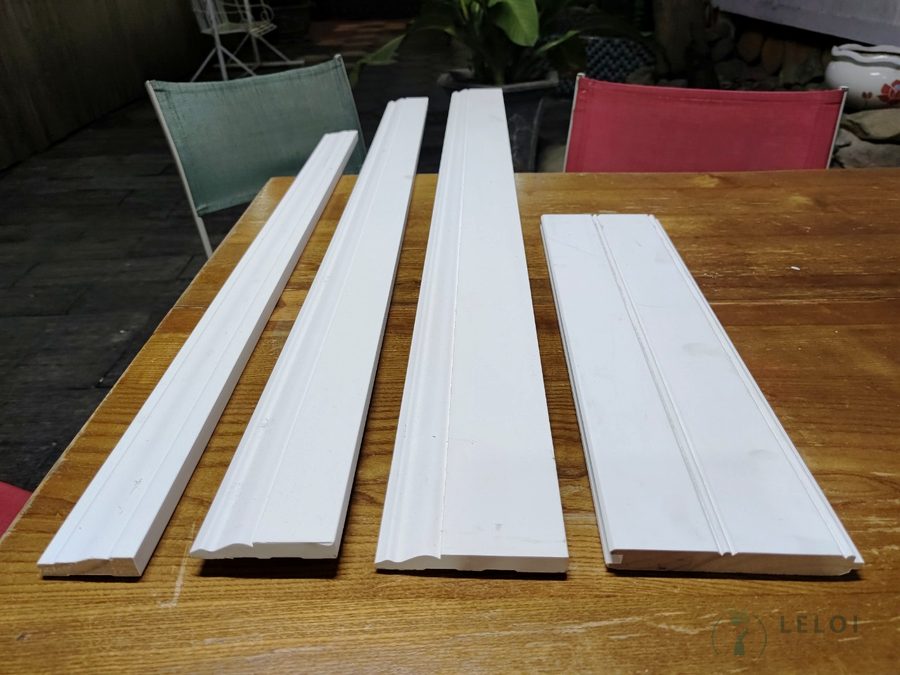
Profile samples
Casing, baseboard, crown, jamb. Send a drawing or a physical offcut — both work.
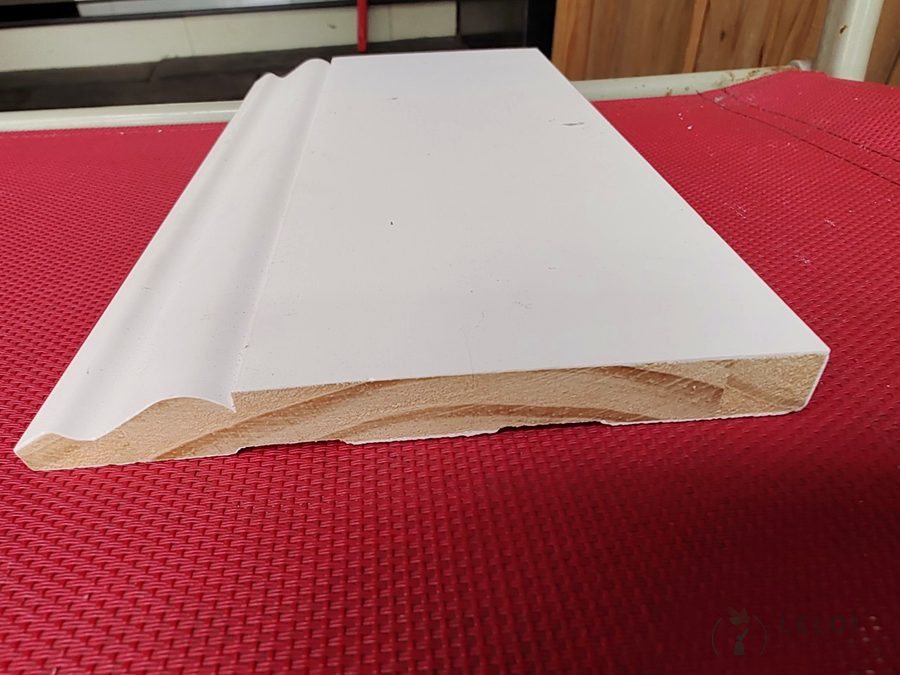
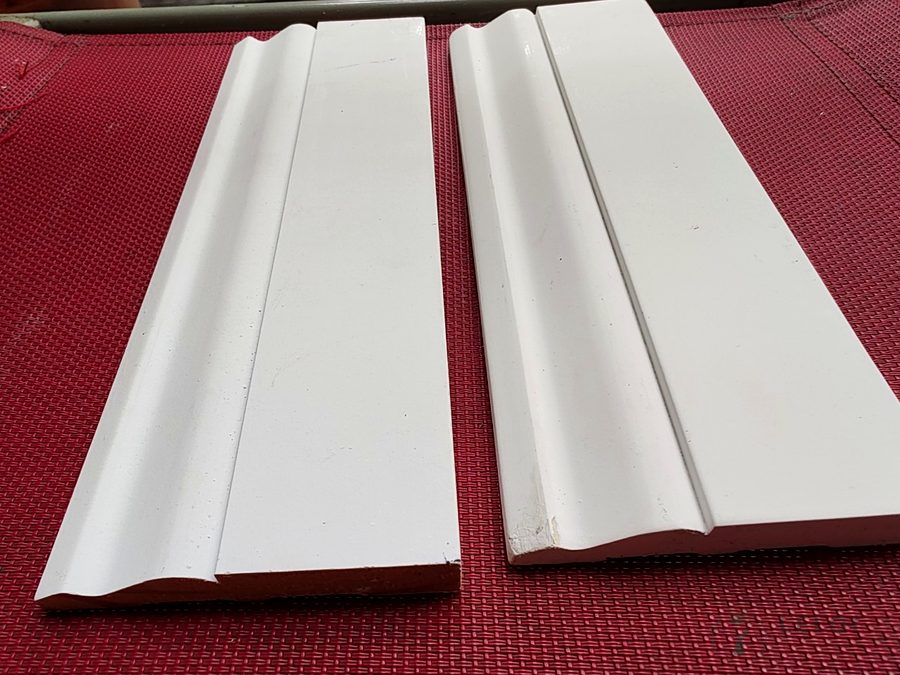
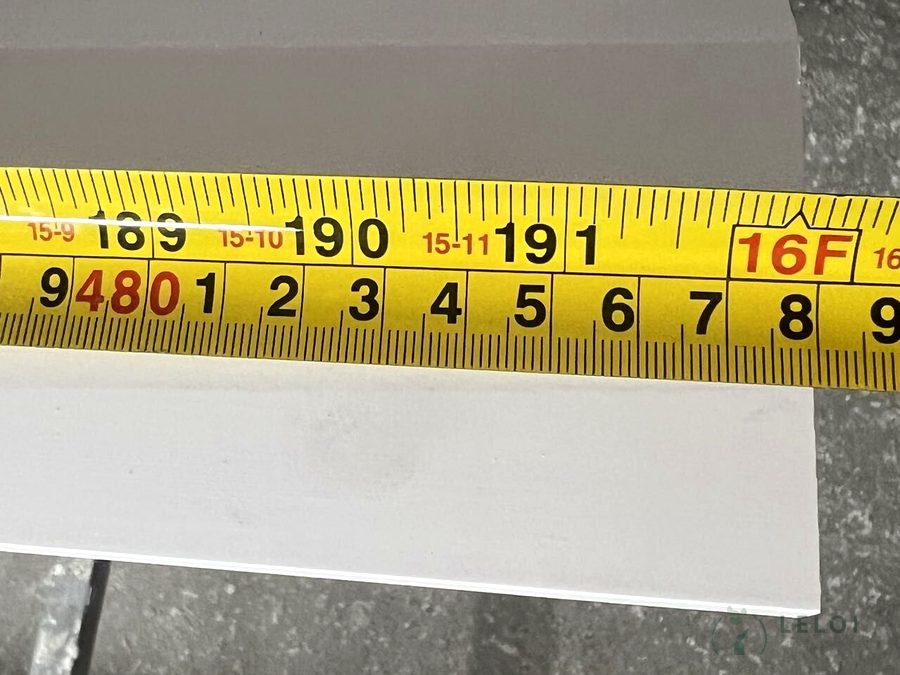
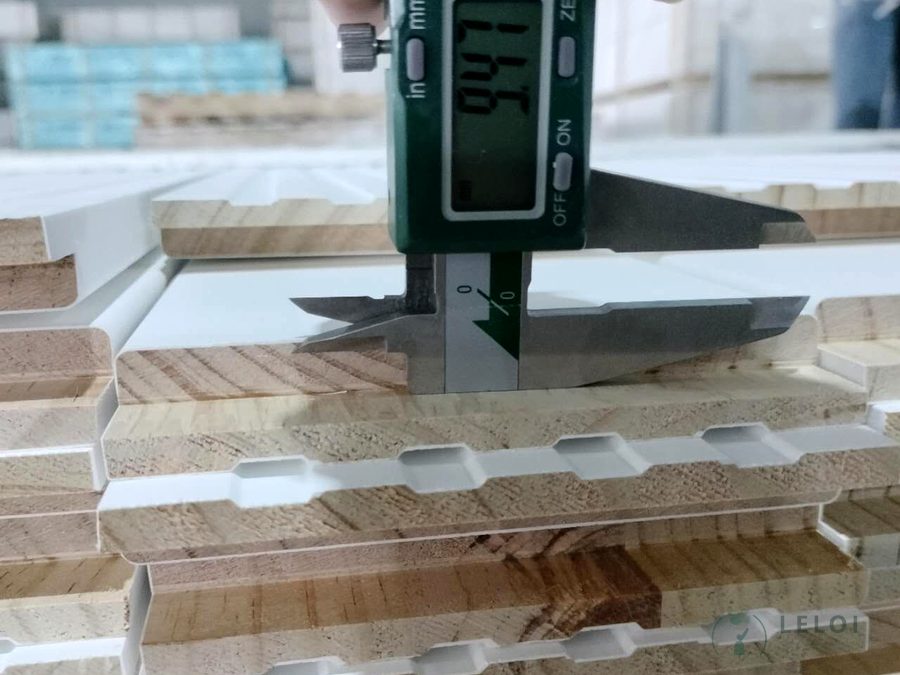
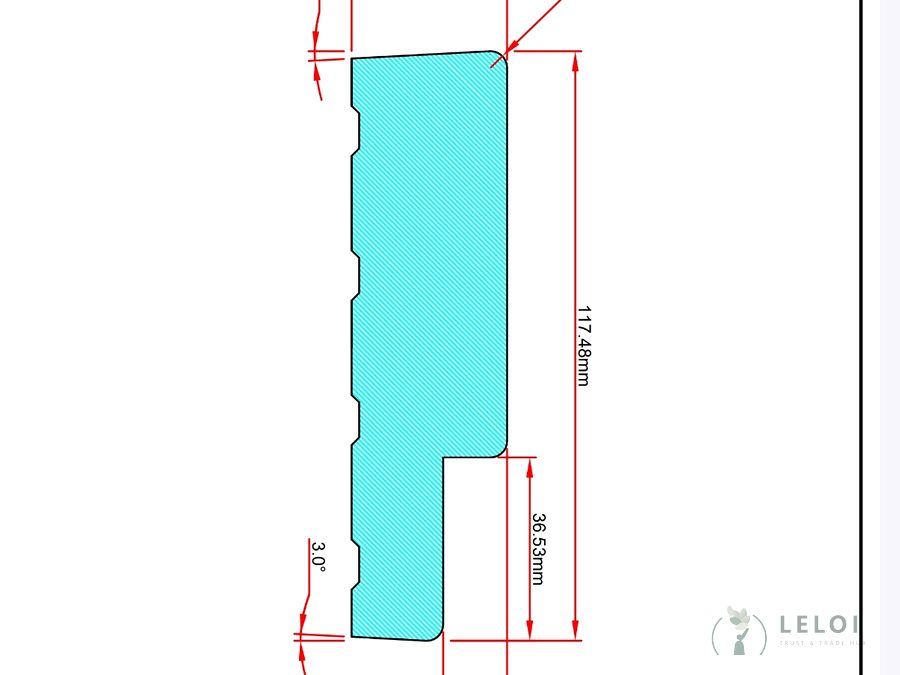
Dimension checks
Calipers on the line, plus the profile drawing with tolerances agreed before the run starts.
Packing & labelling
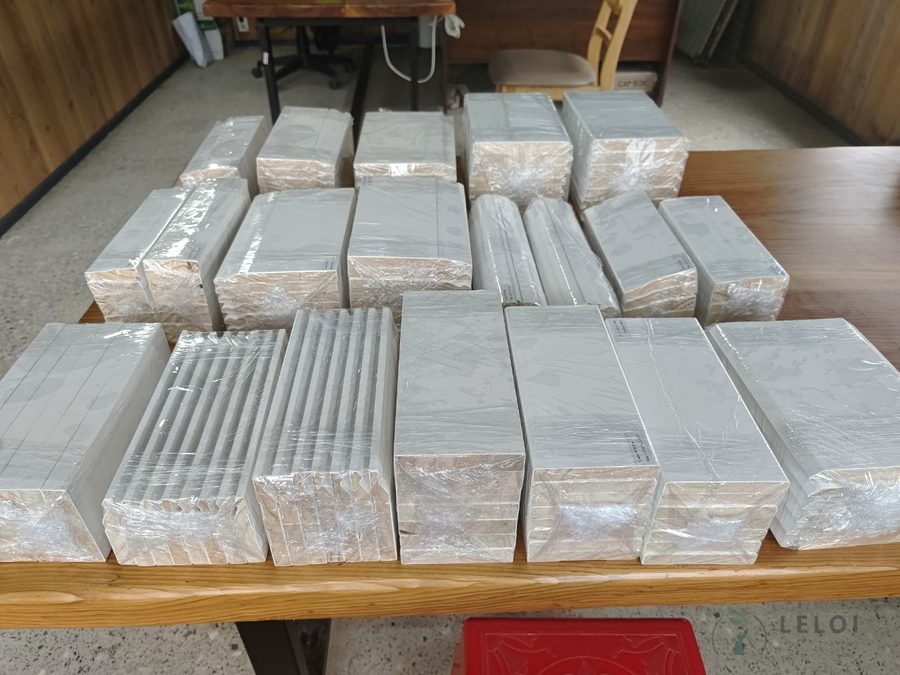
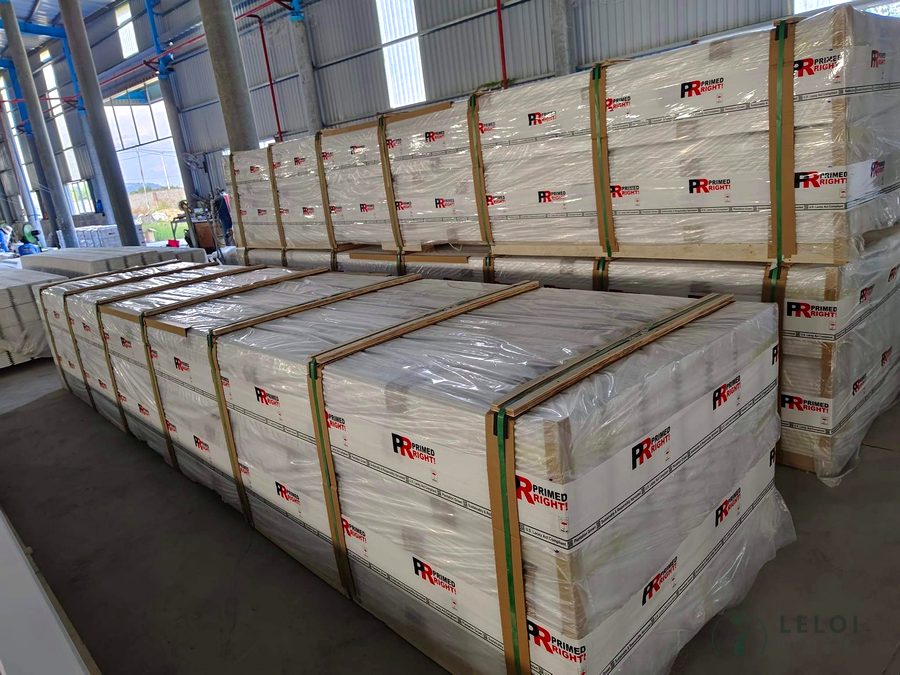
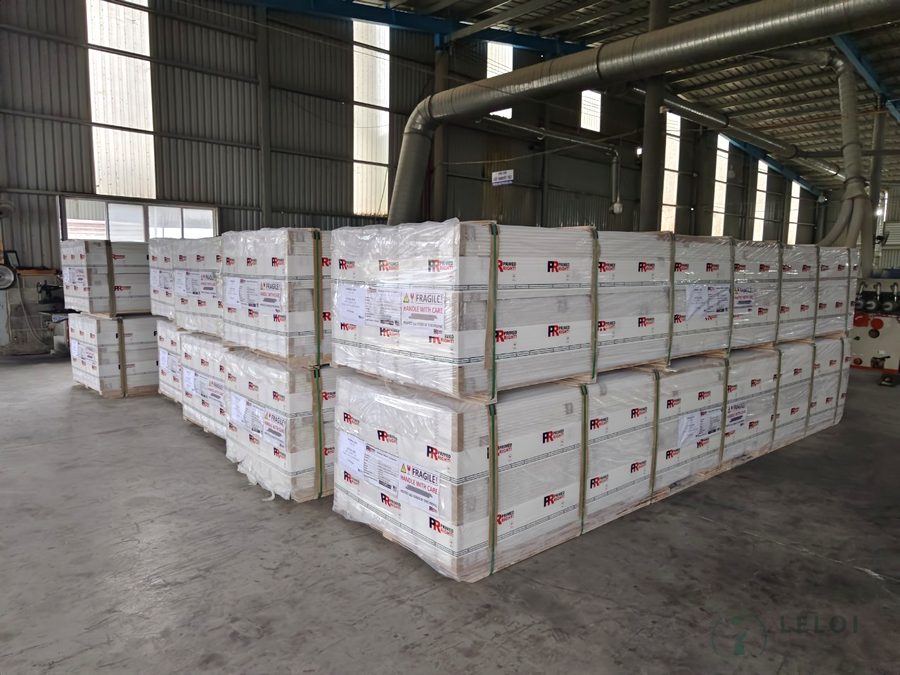
Cartons and pallets built to your retail program — labels, barcodes and counts as specified.
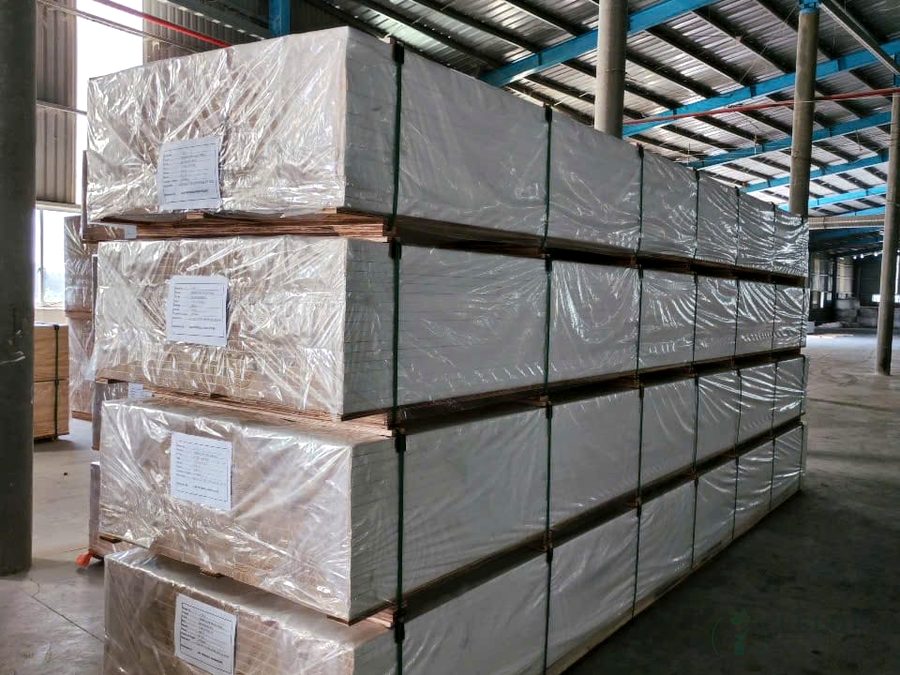
Loading & sealing
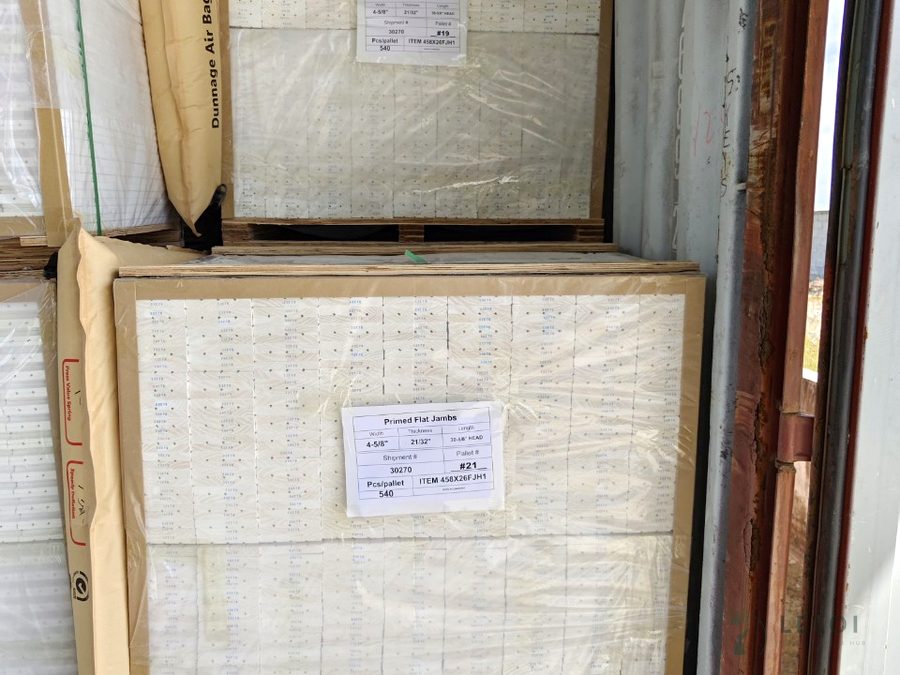
Loading photos and the seal number go to you before the container leaves the yard.

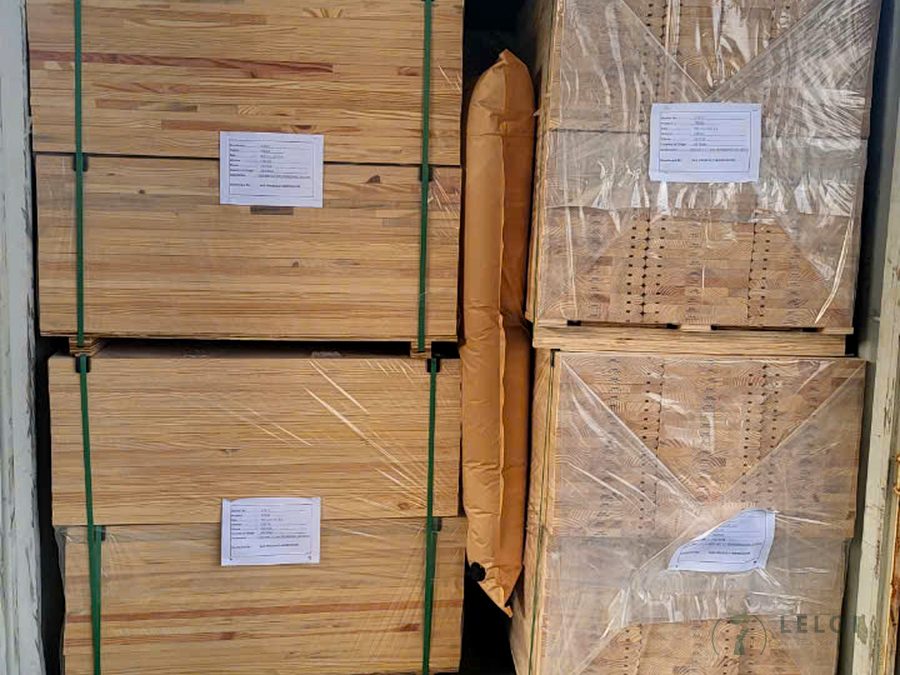
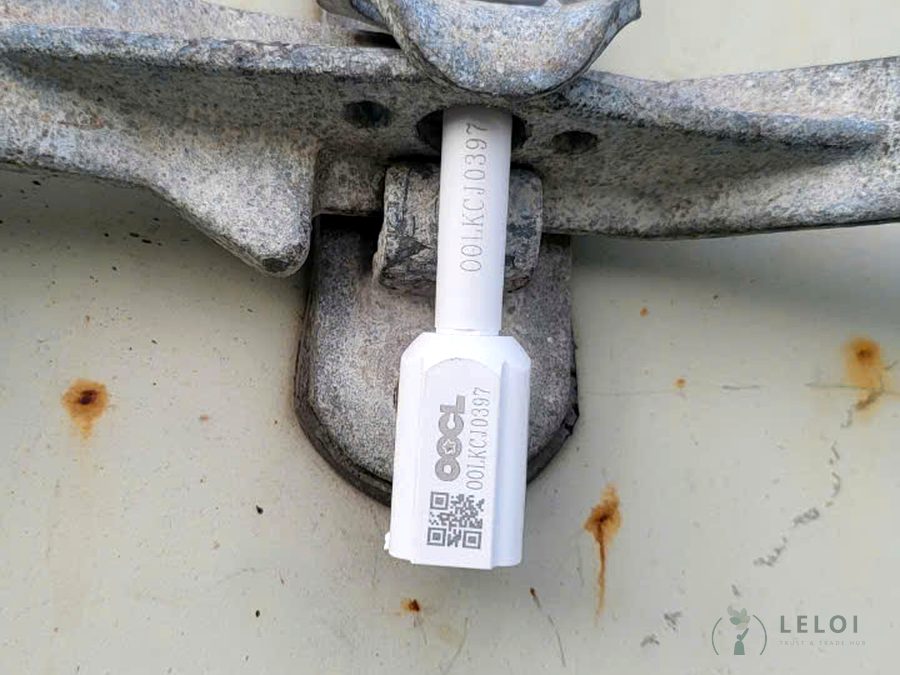
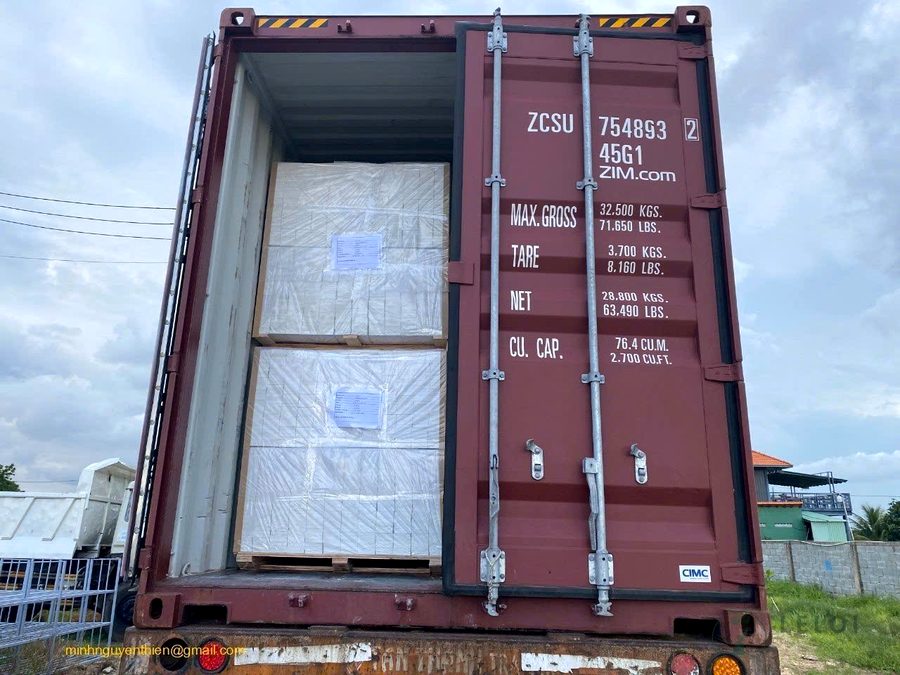
The line, running
Profiling, priming, the finished stock and a 40ft container going out.
Applications
Door & window casing
Baseboard / skirting
Crown & cornice moulding
Door jamb & frames
Panel and wainscot mould
Inside our factory
Full specification
Everything you would normally have to email us for. 1 values come from third-party test reports — the report number is shown so you can ask for the document.
- Timber
- Kiln-dried Southern Yellow Pine (SYP) or New Zealand radiata pine, finger-jointed; solid clear also available
- Primer
- White gesso or lacquer primer, ready for site top-coat
- Lengths
- Up to 17' 9" (5.4 m)
- Profiles
- Tooled to your drawing — casing, baseboard, crown, door jamb
- Moisture content
- On request
- Loading reference
- About 12 bundles per 40ft HC. Piece count per bundle varies with the item code, thickness and profile size, so we work to the two ceilings instead: 44 m³ or roughly 26 tonnes — whichever comes first.
- Substrate
- Medium-density fibreboard, Vietnamese mill; moisture-resistant (MR) grade available
- Board density
- 680 – 800 kg/m³ (42 – 50 lb/ft³) typical for MDF — denser than the pine it replaces, so bundles weigh more per linear foot
View full technical specification (8 more)
- Formaldehyde emission
- MDF is a regulated composite wood product entering the US. The CARB Phase 2 / TSCA Title VI limit is 0.11 ppm for MDF and 0.13 ppm for thin MDF (≤ 8 mm, about 5/16"). Ask for the board mill's certificate, not the moulding shop's. 40 CFR 770 · CARB ATCM 93120
- Customs classification
- Heading 4411 as a fibreboard article — typically 4411.14.9010 for surface-covered MDF moulding over 9 mm (3/8"). Solid timber mouldings go under 4409 instead. Your broker makes the final call.
- Where not to use it
- No exterior use, and not standard MDF in wet rooms — MDF swells irreversibly once wetted and the paint film fails with it. We will quote finger-joint pine instead and say why.
- Packaging
- Pallet packed, corner protection, PP strapping, plastic-wrapped; export marks per your instruction
- Minimum order
- One 20ft or 40ft container per product line; specifications may be mixed within a line
- Lead time
- Quoted as a specific date with the price — varies by product, season and raw-material supply
- Incoterms
- FOB, CIF, CFR, EXW, DDP
- Private label
- Available — logo on panel face, custom marks and packaging
Test results refer to the samples tested and to the products those reports cover. Tell us your specification and we will send the reports that apply to your order.
Questions buyers ask
Can you tool a custom moulding profile from our drawing?+
Yes. We cut knives to your drawing for casing, baseboard, crown and door jamb profiles, in lengths up to 5.4 m. Custom tooling adds to the first lead time but not to repeat orders, so profile development is worth doing once at the start of a programme.
What primer is used and can it be top-coated on site?+
A smooth white gesso or lacquer primer, applied so it accepts a site top-coat cleanly without further sanding in normal conditions. The timber is kiln-dried Southern Yellow Pine or New Zealand radiata pine, finger-jointed for straightness and dimensional stability.
Is MDF moulding from Vietnam subject to the US antidumping duties?+
The AD and CVD orders cover wood mouldings and millwork from China, not Vietnam, and Commerce continued them for a further five years effective 24 June 2026 — dumping margins of 44.60–230.36% and subsidy rates of 20.56–252.29%. One trap worth knowing: MDF profiles classify in heading 4411, which is not among the HTSUS numbers listed in the orders, but the orders state plainly that the HTSUS list is for convenience and the written scope description is dispositive. Classification is not a shelter. We are a manufacturer, not your customs counsel — if the volume justifies it, file a scope ruling under 19 CFR 351.225 against cases A-570-117 and C-570-118.
How do I verify the moulding is really made in Vietnam?+
Ask for four things, and we will provide all four: the name and address of the MDF panel mill (not just the country), the board purchase invoices matched to your production run, a live unscripted video walk of the profiling and priming line on a date you choose, and the CARB Phase 2 / TSCA Title VI certificate for the board itself. This matters because several suppliers marketing Vietnamese moulding also operate plants in China and Malaysia, and Commerce has already ruled in an adjacent product that hardwood plywood exported from Vietnam but assembled from Chinese inputs is a product of China.
Should I order MDF or finger-joint pine?+
MDF for painted interior trim in dry rooms: it is cheaper per linear metre on wide flat profiles, holds crisp detail, and shows no grain or knots under gloss. Finger-joint pine wherever water is possible or the finish is anything but paint — bathrooms, laundries, door thresholds, and every stained profile. MDF swelling is permanent: a wetted baseboard does not dry back to size, it stays swollen and the paint film fails above it. Pine also holds a fastener better and weighs less per metre. If your programme needs both, run them from one supplier and one loading plan.
What is the minimum order for primed moulding?+
One 40ft container, which is about 12 bundles. You can mix profiles freely within the load — they all come off the same moulding line.
How much moulding fits in a 40ft container?+
We quote by volume and weight rather than by piece, because the number of pieces per bundle changes with every profile. Two ceilings apply — about 44 m³ of bundle volume and roughly 26 tonnes of payload — and which one binds first depends on the material. Primed pine is light enough that you fill the box before you reach the weight limit. MDF is a different calculation: at 680–800 kg/m³ it is close to twice the density of pine, so an MDF order reaches the weight ceiling well before the container is full, and quoting it on volume alone will overload the container. Send your profile list and the material, and we will work out the exact load for your order.
Where does the timber come from?+
Kiln-dried Southern Yellow Pine from the United States or radiata pine from New Zealand, bought through established importers. We pass on the supplier documentation for the batch that goes into your order.
Can you make our profile, and what does tooling cost?+
Send a drawing or a physical offcut. We cut knives to it and run a sample for your approval before the order starts. Tooling is a one-off at the beginning of a programme, not a charge on every repeat order.
Can you pack and label for our retail program?+
Yes — cartons, pallets, labels, barcodes and pack counts to your specification, including your own brand on the pack. Tell us the retail spec at quotation stage so the packing line is set up once.
What do we receive before the container ships?+
Production photos during the run, loading photos before the doors close, and the seal number. If you would rather have an independent check, our inspection service can attend the loading.
Request a quote for Primed Moulding & Millwork
2 minutes to fill · reply within 24 hours with price & availability.
Prefer direct contact? WhatsApp +84 976 790 119 · sales@leloiglobal.com