Short answer
Three substantive changes. First, deforestation: EUDR adds a land-conversion test with a cut-off of 31 December 2020, which EUTR never had. Second, geolocation: you must now identify the plot of land, not merely the country and supplier. Third, the filing: a Due Diligence Statement goes into an EU information system before the goods are placed on the market, replacing a system where records were kept and shown on request. What stays the same is the core logic — information, risk assessment, risk mitigation — so an existing EUTR system is a foundation, not something to discard.
How much of my EUTR system can I keep?
Most of the structure. Supplier onboarding, document collection, country risk assessment, mitigation measures and record retention all carry over. What you are adding is a geolocation layer and a filing step. If your existing system already tracks material to a concession or a forest management unit, the gap is smaller than it looks.
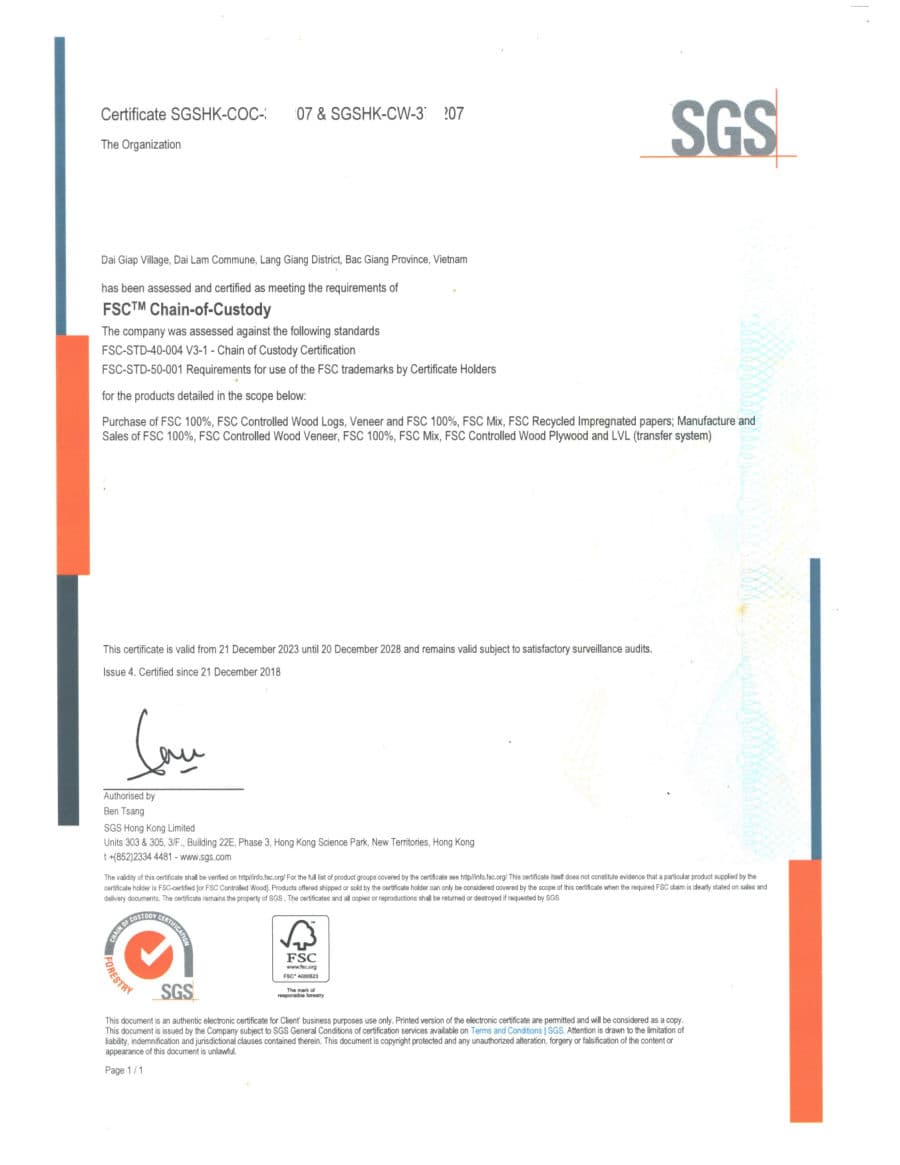
What does not carry over is comfort with country-level statements. 'Sourced from Vietnam, low-risk supplier, FSC certified' was a workable EUTR position and is not an EUDR position. The unit of analysis moved from the supplier to the plot.
What does the cut-off date actually test?
Whether the land the commodity came from was forest on 31 December 2020 and was converted to agricultural or plantation use after that date. Land already in plantation before the cut-off is not caught by the deforestation test, which is why established Vietnamese acacia and eucalyptus plantations — many planted in cycles going back decades — are in a reasonable position, provided the coordinates and planting history can be shown.
Satellite imagery makes this checkable by anyone, including your customers and NGOs. That cuts both ways: a supplier with clean plots gains a defensible position, and a supplier with one bad coordinate cannot hide it in a spreadsheet.
What should I do differently with suppliers this year?
Move the data conversation before the price conversation. Ask for a past shipment's full pack from every supplier on your list, score them on how fast and how complete the response is, and concentrate volume on the ones who pass. Suppliers who cannot produce plot data in 2026 will not suddenly produce it in 2027 under deadline pressure.
Questions buyers ask about this
Does EUDR replace EUTR entirely?+
EUDR repeals and replaces the EUTR framework for the products it covers, with transitional arrangements around the application dates. For planning purposes treat EUDR as the regime you will be operating under and confirm the transitional detail with your compliance counsel against the text in force on your filing date.
Do I need geolocation for recycled or reclaimed wood?+
Material that has completed its lifecycle and would otherwise be waste is treated differently from freshly harvested material under the regulation. The boundary matters commercially and is worth confirming with counsel for your specific product rather than assuming either way — misclassifying recycled content is a costly mistake in both directions.
Have a supplier's documentation checked
Get startedRead next
LELOI EXIM GLOBAL CO., LTD · Tax ID 2802935153