Short answer
Eight checks, in order: verify the legal entity and tax code against the official register; match every certificate to that entity and check validity dates in the issuing body's own database; request a past shipment's full document pack and time the response; run an unscheduled live video walkthrough; ask for production photographs with a date-stamped reference object; check the company's shipment history in customs data; call two named references in your own market; and place a small paid sample order before the first container. Any supplier that fails three or more is not a negotiation problem, it is a different supplier.
Check 1–3: the paperwork layer
Start with the legal entity. Get the full legal name and tax code, then confirm the company exists, is active, and has a business scope that includes manufacturing rather than only trading. Then take every certificate they sent and check the holder name against that entity, and the validity date against the issuing body's public database — not against the scan they emailed you.
Then the document pack test. Ask for the complete file from any shipment they have already made and give a 48-hour window. What you are measuring is not the content, it is the response time and the internal consistency — whether the volumes on the plot documents reconcile with the packing list.
Check 4–5: the physical layer
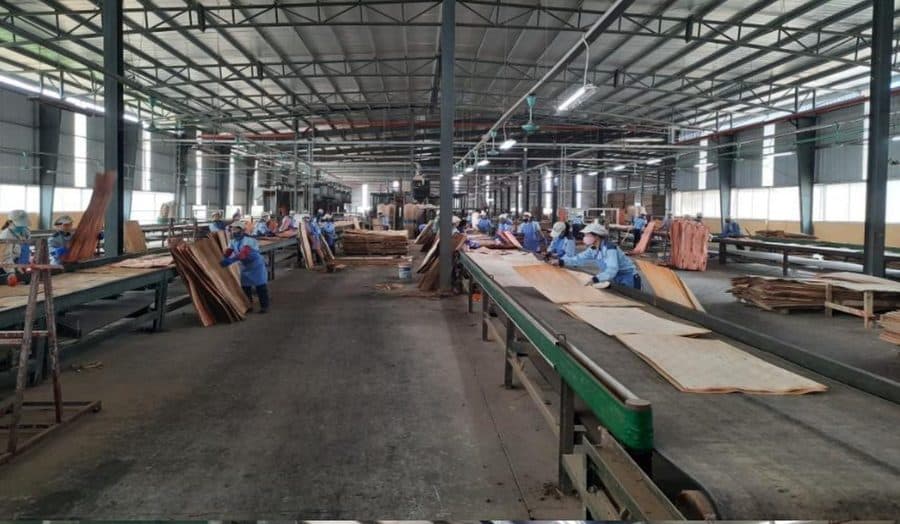
Ask for a live video walkthrough with less than two hours' notice, and ask to see four specific places: the log yard, the dryer and press line, the sanding and grading area, and the packing zone. What you are looking for is ordinary operating mess — a spotless factory on a Tuesday afternoon is a factory that is not running.
For still photographs, ask for a specific object in frame — today's newspaper, a written note with a number you choose. This is a low-effort check that stops recycled stock photography instantly, and it is the single most useful thing in a remote audit relative to the effort involved.
Check 6–8: the evidence layer
Customs shipment records tell you whether a company actually exports, to whom, in what volumes and how consistently. A supplier claiming ten containers a month to Europe with no export history is telling you a story. This is the check most buyers skip because they assume the data is expensive; it is not, and it settles questions that a hundred emails will not.
Then call references in your own market — not references the supplier picks in a country you cannot reach. And finish with a paid sample order at commercial terms. A sample you pay for behaves like a real order; a free sample behaves like marketing.
Questions buyers ask about this
How much does a proper remote audit cost me?+
Around three hours of your own time, plus the cost of a shipment-data lookup and a sample order. Against a container of the wrong product, or a deposit paid to a company that turns out to be a trading office, it is not a meaningful cost — the reason people skip it is time pressure, not money.
Should I use a third-party audit firm instead?+
For a long-term supply relationship at volume, yes — a physical audit covers machinery condition, workforce practice and capacity in a way remote checks cannot. For screening a shortlist of five suppliers down to two, remote checks are faster and cheaper, and you should audit only the ones that survive them.
Have a Vietnamese supplier verified
Get startedRead next
LELOI EXIM GLOBAL CO., LTD · Tax ID 2802935153