Short answer
For North America, specify profiles in imperial dimensions matched to standard trim patterns — casing, base, crown, shiplap — in lengths sold by the yard or the piece rather than metric run. Finger-jointed radiata pine with a two-coat water-based acrylic primer on all visible faces is the volume standard; MDF profiles serve the paint-grade segment where a perfectly smooth face matters more than screw holding. What separates a repeat programme from a one-off container is packaging discipline: a bundle with crushed ends is unsellable at retail even if every stick inside is perfect.
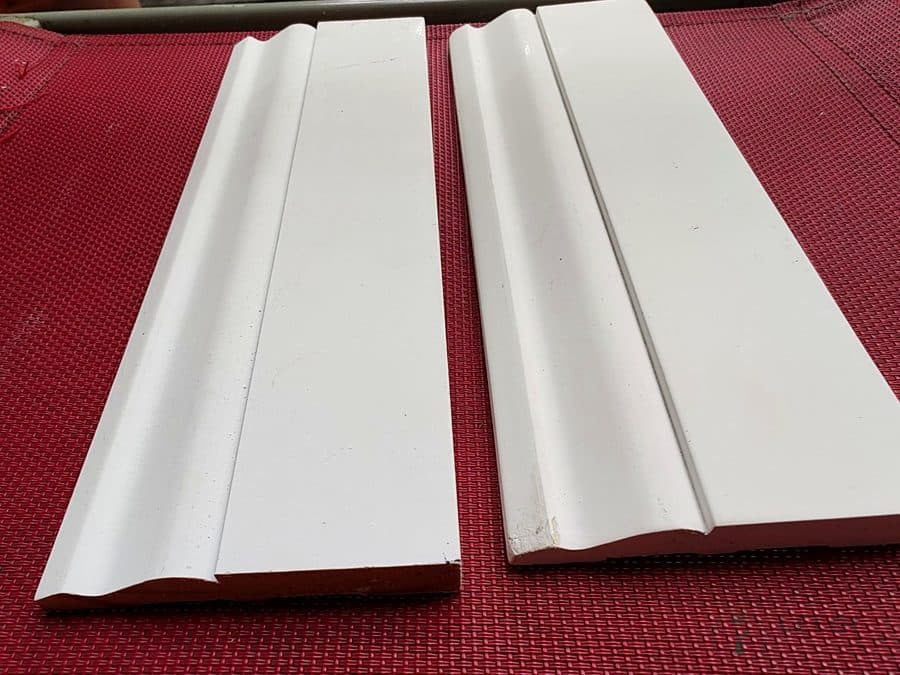
Why does packaging decide the programme?
Because moulding is sold from a rack in a store, and the customer picks up the stick and looks down its length. A bundle that arrives with crushed ends, scuffed primer or a bowed stick on the outside costs the retailer margin on every piece they downgrade. The mill's packing standard is therefore part of the product, not part of the logistics.
Specify end protection, bundle count, film wrap, strapping and the maximum bundle weight a person can handle. Then ask for photographs of a packed bundle before production, not after — this is a two-email conversation that prevents a container of downgraded stock.
Radiata pine or MDF?
Radiata pine holds fasteners, tolerates humidity swings better and can be sanded on site — the default for installed trim. MDF gives a flawless paint face at lower cost and is the standard for painted profiles in dry interiors, but it does not like moisture and it does not hold a nail the same way. The choice is driven by installation practice in your market, not by price alone.
What documentation does North America require?
For the United States: the Lacey Act plant declaration with species by scientific name and country of harvest — radiata pine is Pinus radiata and the harvest country is usually Chile or New Zealand, which must be declared accurately rather than as 'Vietnam' because the mould was made there. MDF-based profiles bring composite-wood formaldehyde requirements into scope. Confirm classification and applicable rules with your customs broker for each profile family.
Questions buyers ask about this
Can you produce to a retailer's own profile catalogue?+
Yes. Send the drawings or physical samples and we cut knives to match, then run a short approval length before committing the order. Tooling takes about two weeks per profile. Whether a profile is free to copy is your commercial and legal call.
How do you prevent primer damage in transit?+
Full cure before packing, film interleaving between layers where the profile has a delicate edge, end caps, and bundles strapped so sticks cannot shift against each other. We photograph packed bundles as standard so the condition at the mill gate is documented before the container closes.
See profiles, primer options and packing
Get startedRead next
LELOI EXIM GLOBAL CO., LTD · Tax ID 2802935153