Short answer
In our shipment dataset as of August 2026, birch leaving Canada moves almost entirely as kiln-dried sawn lumber under HS 4407.96, priced around 495–555 USD/m³, and the buyers are Vietnamese furniture and component factories. Canada does not appear as an origin for birch plywood at all — it sells the raw material and buys the panels back. Meanwhile the largest origins of birch panels in Asian trade are Vietnam, Kazakhstan, China and Russia. The commercial gap this reveals is simple: legally documented Canadian birch lumber and Vietnamese pressing capacity currently meet only in a handful of shipments.
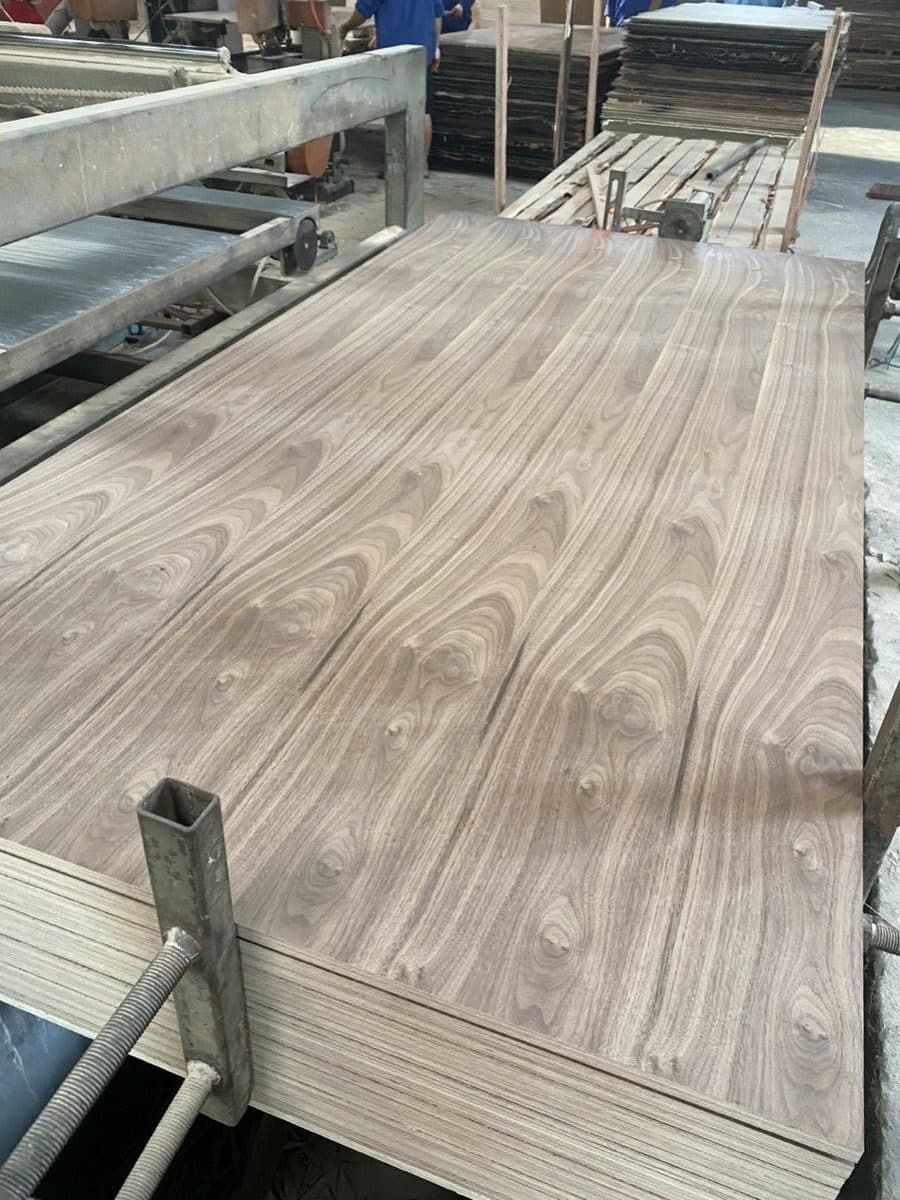
What the records show about Canadian birch
Filtering 9,840 birch shipment records for Canadian origin returns a small, consistent picture: kiln-dried white and yellow birch lumber, 25.4 to 50.8 mm thick, 76 to 381 mm wide, 1,219 to 3,658 mm long, graded Select & Better or 1 Common, shipped by Quebec and Atlantic Canada hardwood exporters to Vietnamese buyers. Prices in the records sit at 495–555 USD/m³, which is upper-tier hardwood pricing, not commodity pricing.
Nowhere in the dataset does Canada appear as an origin for birch plywood. That is not a gap in the data, it reflects the industry: Canada has hardwood sawmills and veneer plants, and its panel production goes to construction sheathing rather than to birch multiply. The birch plywood consumed in Canada is imported — and 17 of the birch buyer enquiries in our marketplace records come from Canadian companies looking for exactly that.
Where does birch actually come from today?
By record count in our dataset, the leading origins for birch shipments are Vietnam, Kazakhstan, China, Russia and Hong Kong, with the United States, Thailand and Mongolia behind them. The prominence of Kazakhstan and Mongolia is the single most important fact in that list, because neither was a significant birch panel origin before 2022. Draw your own conclusion about what changed, and about what an EU operator will have to prove when filing a due diligence statement on material routed that way.
On the demand side, birch shipments in the dataset land most heavily in Vietnam, the United States, the Netherlands, Ukraine and Estonia. Vietnam appears on both sides of the ledger because it imports birch material and exports birch-faced product — which is precisely the processing-hub role the country plays.
What this dataset cannot see
It is weighted towards shipments into and out of Vietnam, and it is built from ocean bills of lading. Roughly 90% of Canada's wood product exports go to the United States, and that trade moves by truck and rail across a land border, which generates no ocean bill of lading. So this dataset is close to blind on Canada–US birch flows, which are the largest flows that exist. Anyone telling you otherwise from the same kind of data is overstating what it contains.
We publish the limitation because a trade-data conclusion is only as good as the honesty about its coverage. For Canada–US land trade you need customs data covering road and rail entries, which is a different and separately purchased source.
What the gap means commercially
Canadian birch is legally documented, traceable to managed forests, and priced as a premium hardwood. Vietnamese mills have veneering and pressing capacity, plantation cores with plot-level documentation, and duty positions that differ from Chinese product in several markets. The two currently meet in a handful of shipments a year. For a buyer who needs birch appearance with a defensible origin story, that combination is worth pricing out rather than assuming it does not exist.
Questions buyers ask about this
Which HS codes cover birch trade?+
Birch logs are 4403.96, birch sawn lumber is 4407.96, veneer sheets fall under 4408, and plywood with a birch outer ply is generally 4412.33 with national subdivisions. Almost all Canadian birch in our records moves under 4407.96, which is the practical marker of a raw-material export position.
Can I get the underlying company list?+
Named importers, exporters, volumes and dates sit in our shipment records and buyer enquiry database. Access is through the trade data tools rather than published on an article page, because contact-level data has its own handling rules. Tell us the HS code, origin and destination you care about and we will tell you what is in there before you commit to anything.
Is Canadian birch a realistic input for Vietnamese plywood?+
For faces and cross-bands, yes, and it is already happening in small volumes — the records show Vietnamese furniture factories importing Canadian birch lumber today. For full birch multiply the economics are harder because every ply is imported at premium hardwood pricing. Ask for both costings before deciding which one your product actually needs.
Discuss a birch programme
Get startedRead next
LELOI EXIM GLOBAL CO., LTD · Tax ID 2802935153